Turning digital into physical
Geometry work Object takes on
More than twenty projects in about ten sectors have been delivered, among them medical devices and additive manufacturing.
Geometry rebuilt for every order
Parts made to a scan or a list of dimensions are generated from design rules that stay the same between orders.
Geometry within process limits
Generated geometry respects the limits of the process, such as the bend radius of sheet metal or the reach of a milling tool.
Nesting and material use
A solver packs parts onto sheets or into a build volume and can batch several orders into one job.
A geometry kernel inside a product
The computation runs headless behind an API or in the browser, with no CAD licence on the user's machine.
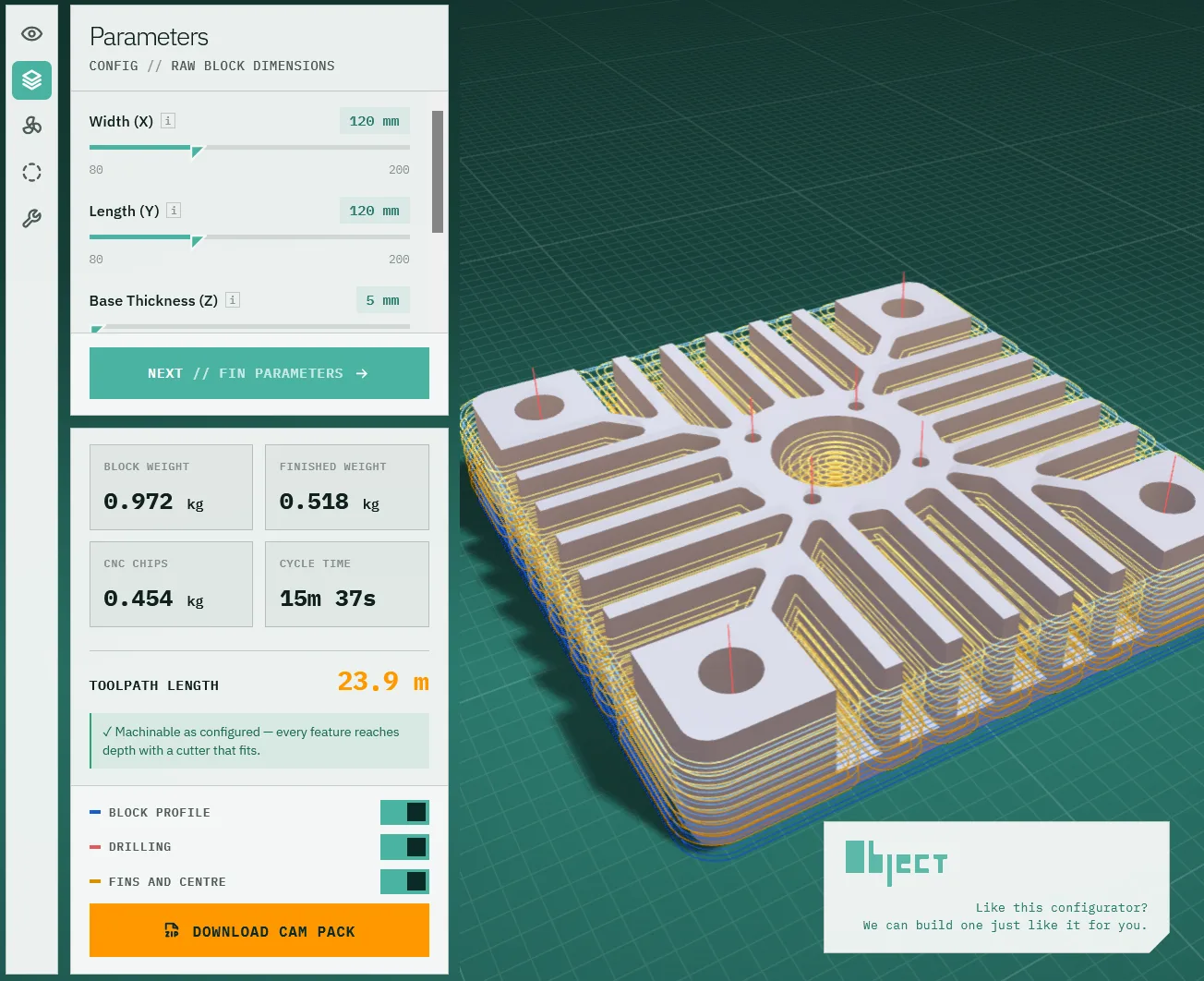
Demo: heatsink configurator
https://cnc.demo.object.pl/ runs in the browser, without sign-up.
The block and fin parameters drive a model that is checked for machinability: every feature has to reach its depth with a cutter that fits.
The panel reports the finished weight, the chip mass, the cycle time and the toolpath length.
The CAM pack downloads as one ZIP with a PDF, a DXF, an STL and a JSON file, and contains no G-code.
Demo: desk configurator
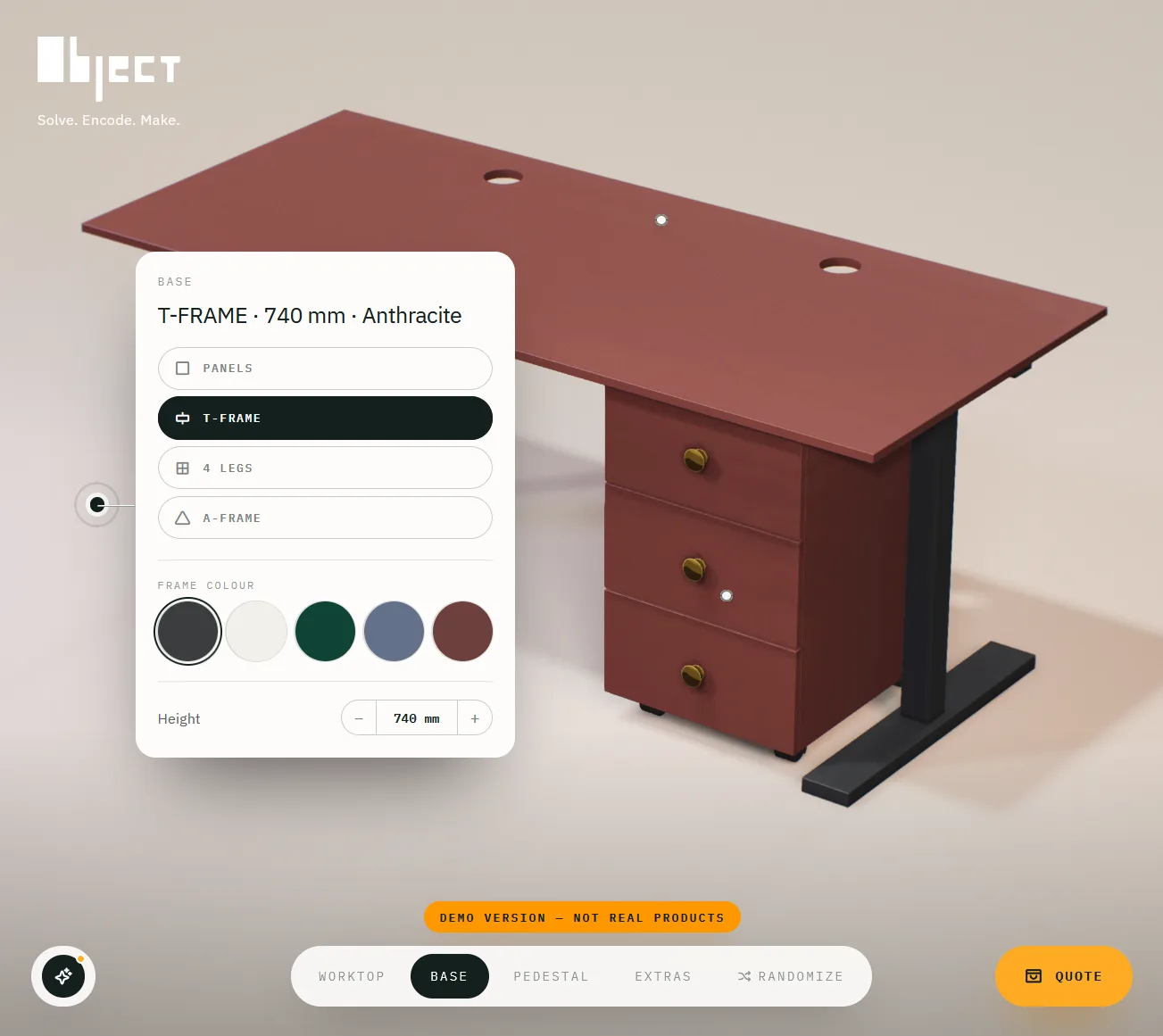
https://desk.demo.object.pl/ runs in the browser, without sign-up.
The worktop, base, pedestal and extras each have their options, and the 3D model rebuilds with every change.
Changes can also be typed or spoken to an assistant, which applies them to the model.
The quote panel lists the chosen configuration. The demo is not a shop, and its products do not exist.
Case: [Klient: MDH]
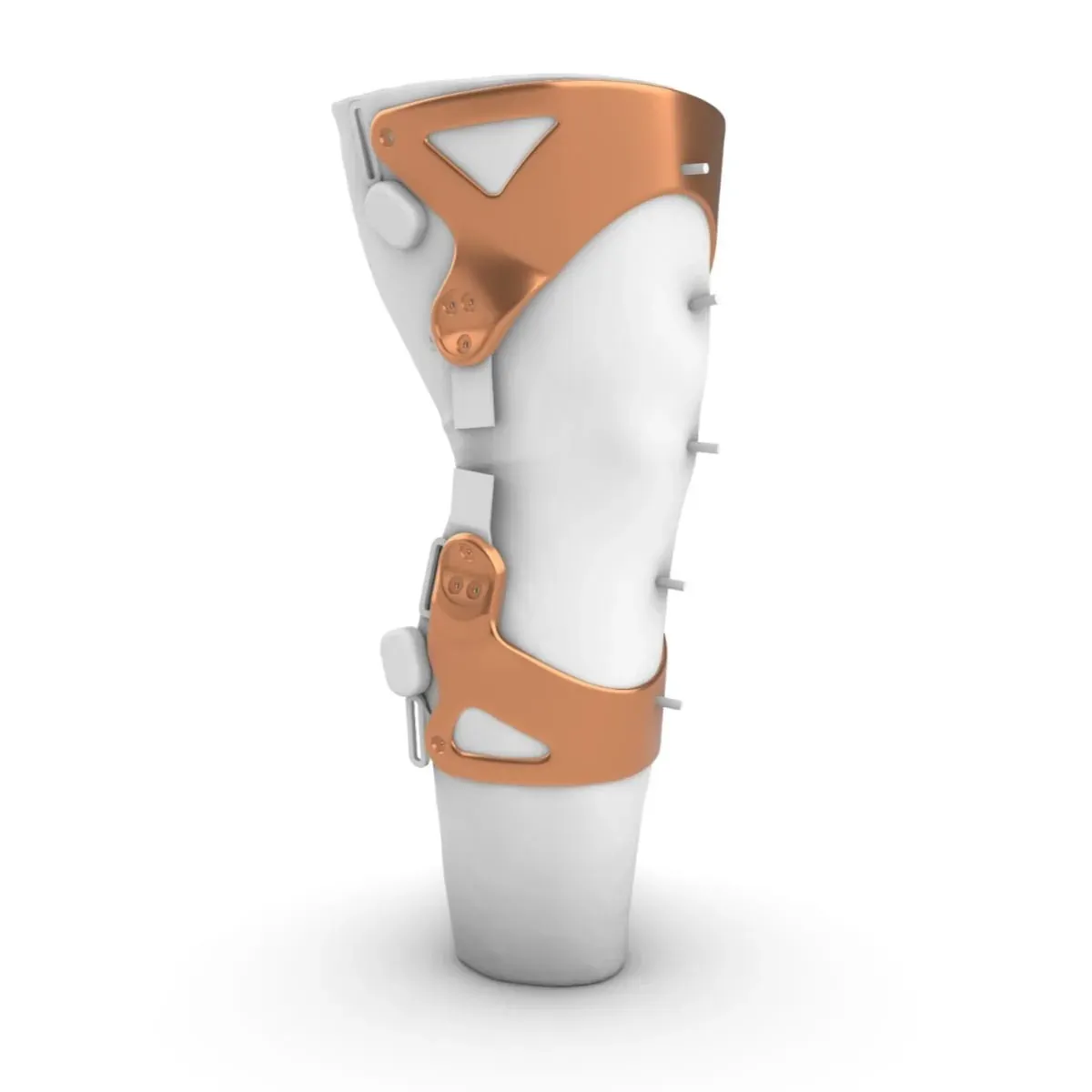
Knee orthoses designed on a 3D scan of the patient's leg
Object wrote a Rhino plugin that aligns the leg scan to the motion guides and builds the orthosis on it from parameters the technician sets.
Design time for one orthosis fell from about eight hours of manual CAD work to ten minutes.
The method is described in a peer-reviewed paper in 3D Printing in Medicine (2026): https://doi.org/10.1186/s41205-026-00323-z
Case: [Klient: ZS]
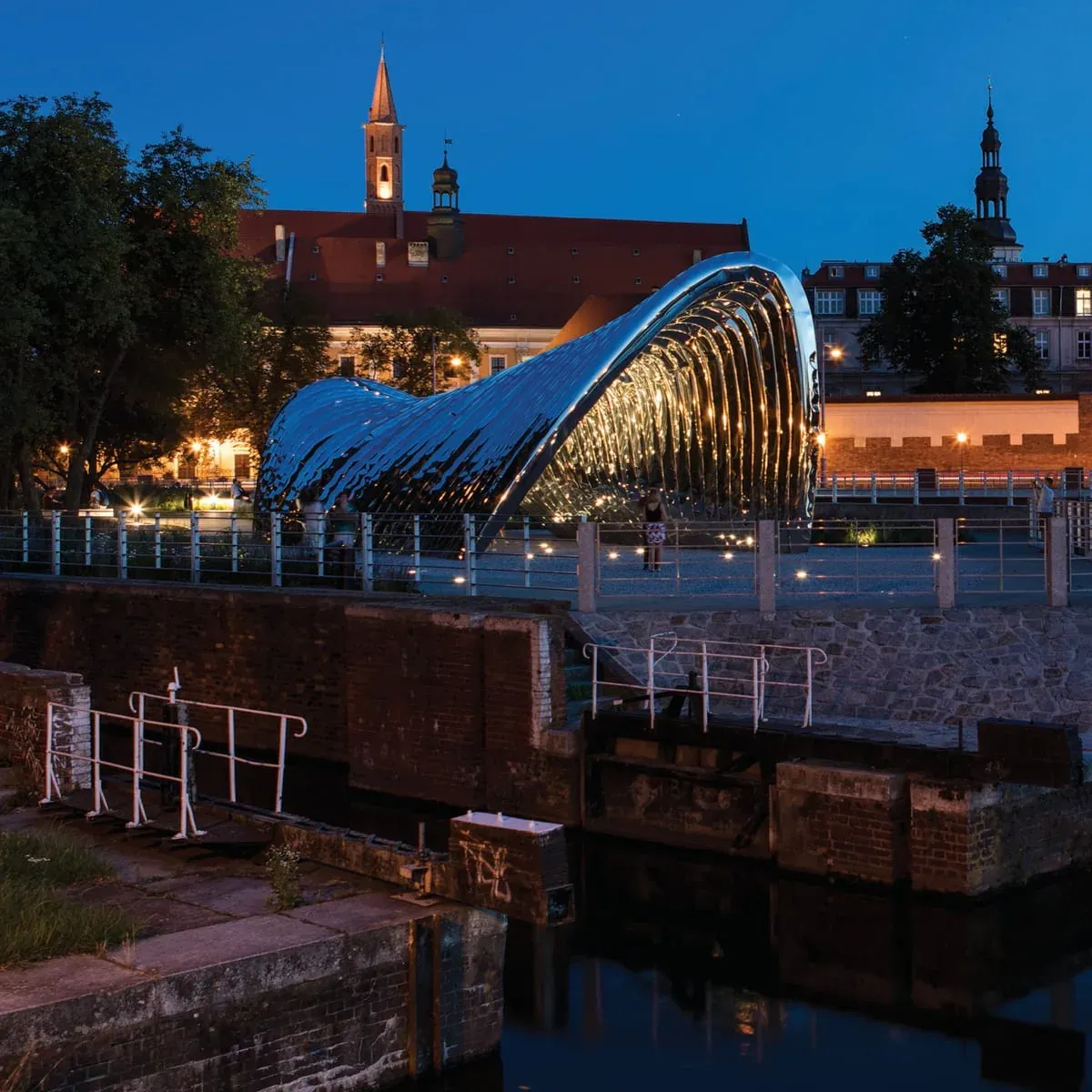
[Projekt: N], a 16-metre sculpture of inflated steel arches in Wrocław
[Klient: ZS] inflates welded steel sheets with compressed air, a technique the studio calls FiDU.
Object wrote a parametric toolkit in Grasshopper in which the designers tried dozens of arch variants, with immediate feedback on what FiDU could produce. For each variant the toolkit unfolded the arches into flat patterns for laser cutting and produced a mesh for FEA strength analysis.
Case: [Klient: MW]
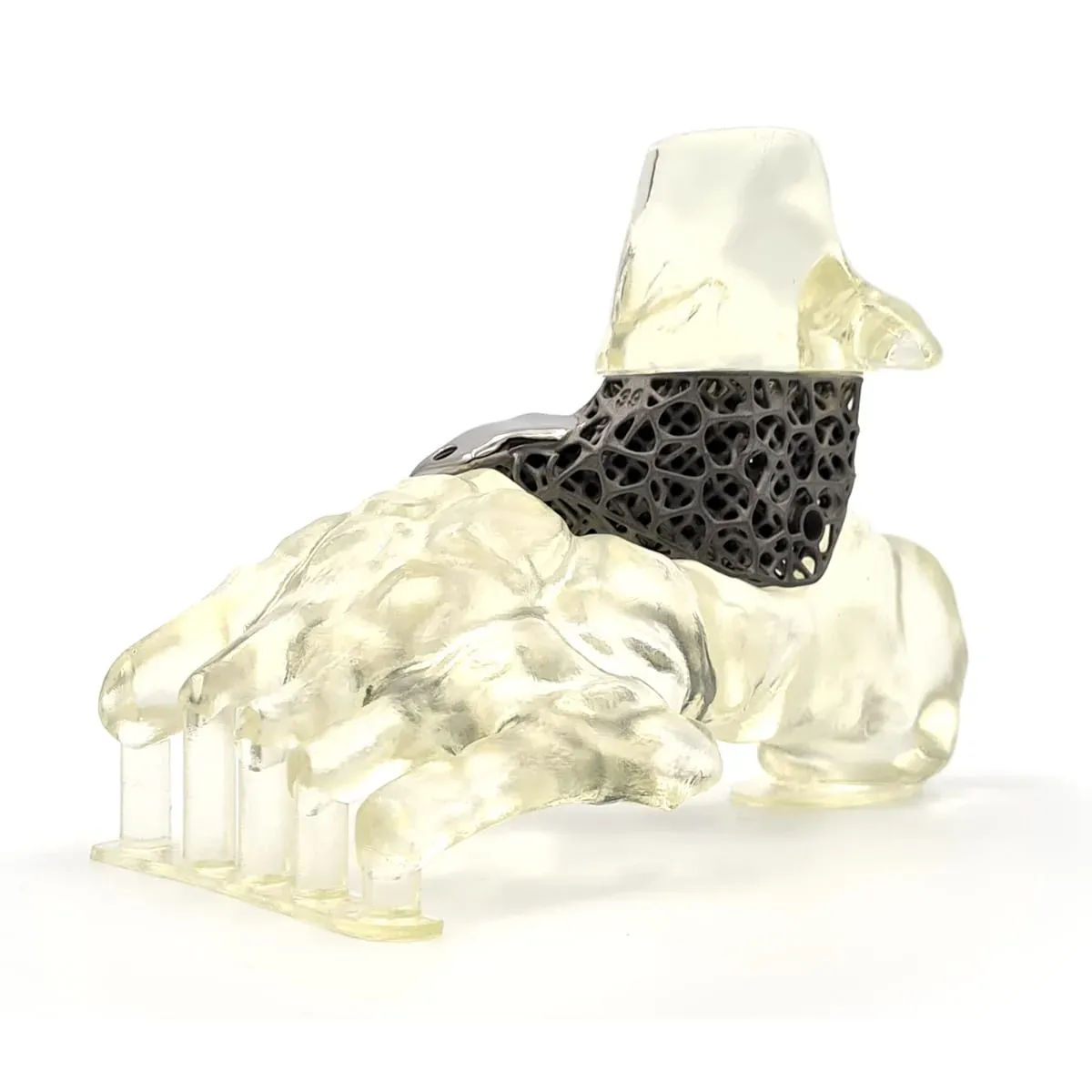
Porous titanium implants printed by laser powder bed fusion
[Klient: MW] makes patient-specific titanium implants for joint repair.
Object wrote algorithmic tools that generate the implant's mesh topology with controlled pore sizes and self-supporting vertical elements. The printed implants need fewer support structures.
Generating the structure for one patient takes a few minutes. Modelled by hand, it took several working hours.
For engineers
3D scripts and algorithms that do the boring work for you.
Scans
A script repairs the scan mesh and returns the cleaned file with a report of the features it found.
Pre-correction
The model is pre-corrected for the shrinkage the process is known to cause, before it is printed or machined.
Batch output
Production files in STL or STEP are generated and oriented for a whole batch in one run.
Geometry over an API
Geometry runs on a server and the workstation only displays the result. One server licence serves all users instead of a CAD seat for each.
For R&D
New geometry on the machines you already have.
Algorithms around the material
Where off-the-shelf CAD cannot simulate how a new material behaves, the algorithm is written around the physics of that material.
Variants under real constraints
A solver generates dozens of variants under the real constraints of the part. The engineers compare finished variants and model none of them by hand.
Plugins Object publishes
Each one has its own page on object.pl, and all of them can be tried before any contact.
Anemone
Anemone adds loops to Grasshopper. Two components, Loop Start and Loop End, repeat part of a definition without a script.
Starling
Starling lets Grasshopper evaluate and morph meshes the way it handles surfaces.
Owl
Owl is a .NET library that holds data for machine learning in plain arrays and connects to Accord.NET.
Phenome Link
Phenome Link opens a live Grasshopper canvas to an AI agent over local HTTP, through an MCP server. The code is under the MIT licence.
Geometry feasibility audit
Show us the hardest file your current CAD chokes on.
€3,999 net, fixed price
The price stays the same whatever the effort turns out to be.
The full fee is credited against the project that follows the audit.
Three to four weeks
Work starts after a 30-minute call about the problem and the data. If the problem is not a fit, Object says so on that call and charges nothing.
A written verdict
The verdict sorts the work into fixed scope, bounded risk and research, and gives a price range for the full build with its assumptions.
A clear no, with the reason, is a valid result.
Send us the file that broke your CAD.
Two sentences about the problem are enough for a first message, and a written reply from an engineer comes within two working days. Files and questions go to hi@object.pl, and the audit request form is at https://object.pl/audit/.